Model

Service Hotline

0755-82564498

News Center

Big data analysis of JSSC, a top tier journal in chip design: none of the top 50 Chinese companies with institutional contributions made it onto the list! Several chip companies from the United States and South Korea have entered the top ten
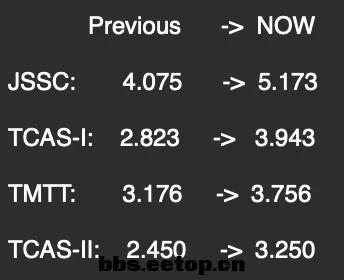
1.Overview of Journal Citation ReportsThe latest Journal Citation Reports (JCR) have been released, and the impact factors of microelectronics related journals have been significantly improved. Among them, JSSC, a top tier journal, achieved an impact factor of over 5 for the first time (reaching 5.173), while TCAS-I surpassed TMTT and came in second place. TCAS-II also entered the 3-point range for the first time.At present, the journals (Q1) of Electrical and Electronic Engineering (Engineering, Electrical&Electronics) in the JCR division (non Chinese Academy of Sciences division) are JSSC (rank: 33), TCAS-I (rank: 57), and TMTT (rank: 61). (Note: One of the requirements for Shenzhen Peacock Plan Class C (1.6 million) is to publish three JCR Q1 journals.). )  Figure 1. Impact factor ranking of microelectronics related journals, JSSC ranks first with 5.1732. JSSC influencing factorsBelow we will analyze the relevant data of JSSC in detail. Figure 2 shows the specific calculation formula for the JSSC impact factor in 2018. It refers to the number of JSSC papers cited in 2017 and 2016 (2716) divided by the total number of papers published in 2017 and 2016 (525) throughout 2018. Figure 2 JSSC Impact Factor Calculation Formula3. Reasons for the significant increase in JSSC's impact factor in 2018As shown in Figure 3, among the top 7 papers with the highest number of applications in 2018, AI papers published by MIT's Sze research group contributed 111 citations, far higher than JSSC papers later on. The remaining highly cited papers mainly focus on 5G phased array, Internet of Things, etc. This also reflects the current era background of artificial intelligence (AI), 5G millimeter wave communication, and 5G Internet of Things. In the foreseeable years, these topics will still be key to improving the JSSC impact factor. It is worth mentioning that the 77G phased array automotive radar JSSC, developed by the research group of Wang Zhihua and Chi Baoyong from Tsinghua University in China, ranks fourth in highly cited papers. Which countries have contributed to JSSC? As shown in Figure 4, the contribution of the United States to JSSC is in an absolute leading position, even higher than the sum of the countries ranked 2-9 behind. This reflects the absolute dominance of the United States in chip design, and is also the reason why the United States dares to impose chip embargo and technology blockade on Huawei and ZTE companies in China without restraint. After decades of continuous struggle, Chinese Mainland's contribution to JSSC has reached the third place, lower than that of South Korea and slightly higher than that of Japan/Netherlands. Taiwan, on the other hand, ranks sixth. Among the top ten countries and regions, Asian countries and regions account for 5 places, with South Korea ranking second, reflecting the broad prospects of integrated circuit design in Asia. 5. Which institutions have contributed to JSSC? Figure 5 shows the top 50 universities or companies contributing to JSSC. The University of California System and Intel are listed as the top contributing universities and companies, respectively. In terms of the company, well-known chip companies such as Intel, Broadcom, Qualcomm, and Samsung are all ranked in the top ten. Unfortunately, Chinese chip design companies did not make the list. In recent years, the University of Macau in China has experienced rapid development in microelectronics, ranking 13th on the JSSC contribution list. The Hong Kong University of Science and Technology ranks 22nd. Only Tsinghua University from mainland China made the list, tied for 41st place. In Taiwan, China, Hsinchu Tsinghua University and National Jiaotong University are on the list. It can be seen that the University of Macau has become the most shining star in microelectronics design in Greater China. This list can also serve as a guide for students who want to study microelectronics abroad to choose schools. 6. ConclusionAs the top tier journal in integrated circuits, JSSC's big data analysis can accurately reflect trends in integrated circuits. The JSSC papers on AI and 5G have become popular, increasing the impact factor of JSSC and indicating the development direction of integrated circuits in the coming years. The JSSC regional contribution ranking shows that Chinese Mainland has made great progress in the field of integrated circuit design after decades of efforts, but it is still far from the United States, even compared with South Korea. In terms of universities, the University of Macau, the Hong Kong University of Science and Technology, and Tsinghua University have all entered the JSSC list, demonstrating the strength of China's scientific research field. Among them, the University of Macau has shone brightly in recent years. In the future, we hope that more universities and chip design companies from mainland China can enter the JSSC list.
2025-06-23 10:09
35.4 billion yuan! Gaota Semiconductor's shareholders' meeting approves its acquisition by Intel
In order to revive its semiconductor leadership position, Intel is currently investing billions of dollars to build its own wafer fabs and expanding its wafer foundry business. In February, it announced a $5.4 billion (35.4 billion RMB) acquisition of Israel's Tower Semiconductor, which has now been approved by its shareholders.According to reports, Tower Semiconductor announced that its shareholders' special meeting has approved the agreement to sell the company to Intel, and both parties need to obtain all necessary regulatory approvals before the transaction is completed.Until the completion of the transaction, Intel's Manufacturing Services Division (IFS) and Tower Semiconductor will operate independently. During this period, Intel's Manufacturing Services Division (IFS) will continue to be led by Thakur, while Tower Semiconductor will continue to be led by Ellwanger.After the transaction, Intel aims to make these two organizations a fully integrated foundry business. At that time, Intel will share more details about the integration plan.It is reported that Gaota Semiconductor Co., Ltd. is a semiconductor professional OEM factory in Israel, headquartered in Migdal Emek, Israel.The company currently operates only one 6-inch wafer fab (process between 1 micron and 0.35 microns) and one 8-inch wafer fab (process between 0.18 microns and 0.13 microns) in Israel, with one 8-inch wafer fab each in California and Texas, providing process services for 0.18 microns (Texas plant) and 0.18 to 0.13 microns (California plant).Gaota Semiconductor ranks seventh in the global wafer foundry market, with an annual revenue of approximately 1.3 billion US dollars. Although its scale is not large, it is in a leading position in special processes and ranks first in the field of analog chip foundry. Its RF and high-performance analog circuit technologies can support a wide range of high-speed, low-power products for consumer, industrial facility, and automotive electronics applications.
2025-06-23 10:04
How to use the buzzer without breaking
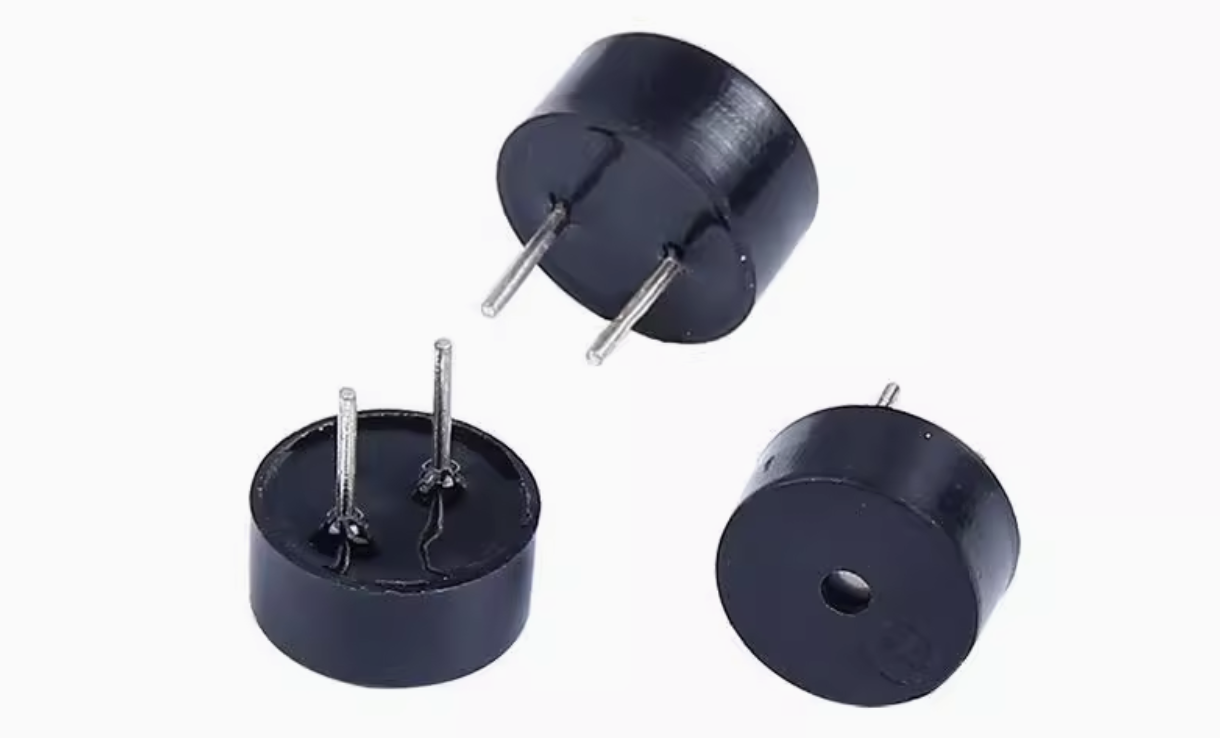
Many users focus on comparing prices when purchasing buzzers, while ignoring the electrical performance parameters of the buzzer, which can easily cause mismatches between the buzzer and the PCB drive circuit, leading to various quality issues. Matching the buzzer with the PCB circuit is the longest and least likely way for the buzzer to last. In addition, during use, the following precautions should be taken: 1.Excessive welding temperature can easily cause deformation of the buzzer shell, loose pins, and result in no or low sound; 2.The starting voltage of the buzzer is too low or too high, which may result in low or sandy sounds during use; 3. After being stored for a period of time, the buzzer produces a low sound, but after using it for a period of time, it becomes normal. This situation may be due to the influence of a humid environment on the buzzer, and attention should be paid to moisture prevention.4. When the buzzer works on the PCB board, it may experience pitch changes or no sound, but there is no problem when tested individually. This situation may be caused by magnetic field interference on the buzzer.
2025-06-23 09:55
Will USB Type-C interfaces be replaced by contactless alternatives?
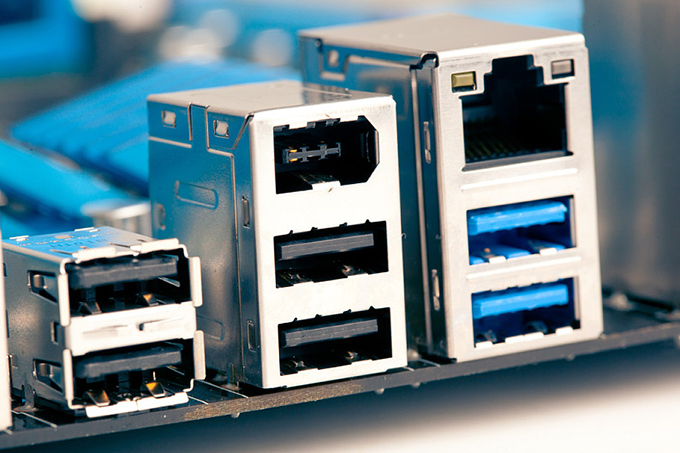
Although device manufacturers in the market are attracted by the compact size, support for multiple protocols, and power management capabilities of Type-C connectors, their market adoption rate is continuing to rise. However, it cannot be ignored that most current Type-C implementations, especially in mobile devices, only use it to transmit electrical energy and data at lower speeds. In addition, it is difficult to manage RFI/EMI emissions from connectors and cables at high data rates, which can interfere with Wi Fi signals.The new non-contact solution can achieve the main advantages of mechanical USB Type-C connectors without any mechanical connectors, including multi protocol support for high-speed data transmission, streaming of high-resolution video files, and management capabilities for fast charging protocols for USB power input and output between devices. In addition, this non-contact connector also supports various low-speed protocols, including I2C and GPIO, which are not currently supported by mechanical Type-C connectors. The solution can transfer data at very high speeds, such as USB SuperSpeed and FullSpeed, without causing interference issues, making it extremely efficient for transferring large files between mobile devices.The industry has already experienced the first strong growth of Type-C connectivity technology in the market, and it is expected that this non-contact solution will become an attractive option. ”Zhang Jinfan said, 'This new plan is expected to be available to customers by the end of the fourth quarter.'.”The new non-contact USB Type-C alternative solution includes Keyssa's Kiss Connectors connector, which is a small and low-power solid-state connector. Meanwhile, F-One technology is a highly integrated aggregation controller product series that can be used to flexibly aggregate various communication protocols into the same F-One serial channel.
2025-06-23 09:53