
1.Overview of Journal Citation Reports
The latest Journal Citation Reports (JCR) have been released, and the impact factors of microelectronics related journals have been significantly improved. Among them, JSSC, a top tier journal, achieved an impact factor of over 5 for the first time (reaching 5.173), while TCAS-I surpassed TMTT and came in second place. TCAS-II also entered the 3-point range for the first time.
At present, the journals (Q1) of Electrical and Electronic Engineering (Engineering, Electrical&Electronics) in the JCR division (non Chinese Academy of Sciences division) are JSSC (rank: 33), TCAS-I (rank: 57), and TMTT (rank: 61). (Note: One of the requirements for Shenzhen Peacock Plan Class C (1.6 million) is to publish three JCR Q1 journals.). )
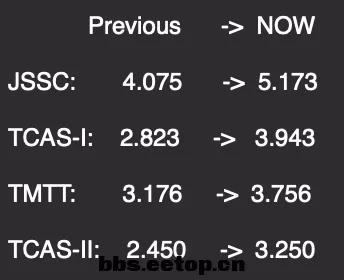
Figure 1. Impact factor ranking of microelectronics related journals, JSSC ranks first with 5.173
2. JSSC influencing factors
Below we will analyze the relevant data of JSSC in detail. Figure 2 shows the specific calculation formula for the JSSC impact factor in 2018. It refers to the number of JSSC papers cited in 2017 and 2016 (2716) divided by the total number of papers published in 2017 and 2016 (525) throughout 2018.
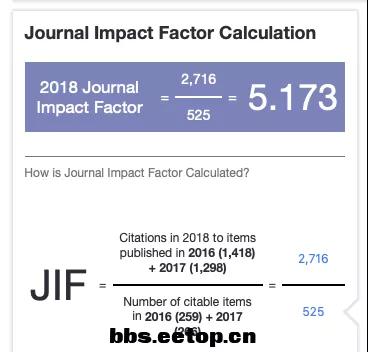
Figure 2 JSSC Impact Factor Calculation Formula
3. Reasons for the significant increase in JSSC's impact factor in 2018
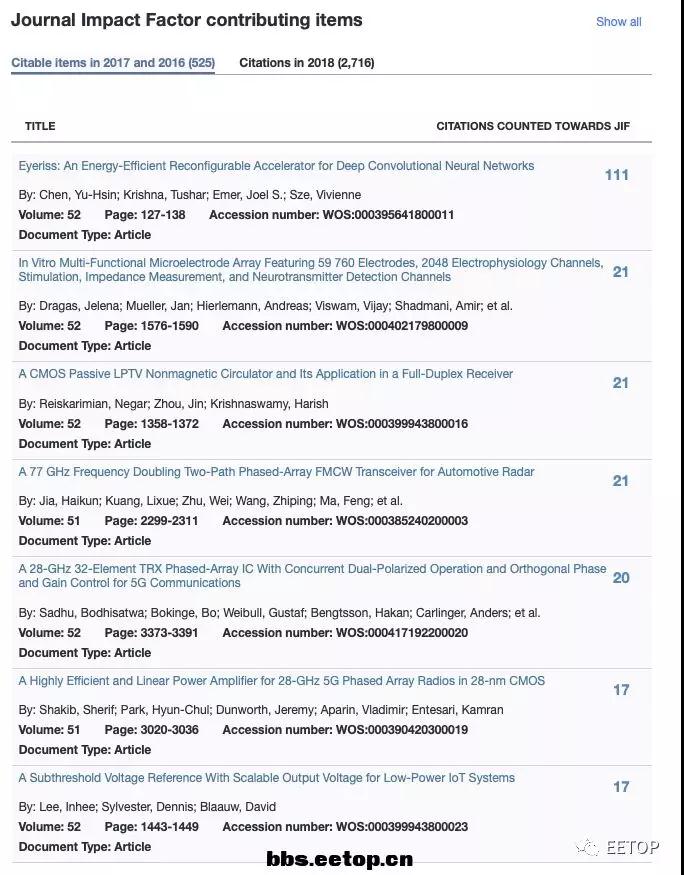
As shown in Figure 3, among the top 7 papers with the highest number of applications in 2018, AI papers published by MIT's Sze research group contributed 111 citations, far higher than JSSC papers later on. The remaining highly cited papers mainly focus on 5G phased array, Internet of Things, etc. This also reflects the current era background of artificial intelligence (AI), 5G millimeter wave communication, and 5G Internet of Things. In the foreseeable years, these topics will still be key to improving the JSSC impact factor. It is worth mentioning that the 77G phased array automotive radar JSSC, developed by the research group of Wang Zhihua and Chi Baoyong from Tsinghua University in China, ranks fourth in highly cited papers.
Which countries have contributed to JSSC?
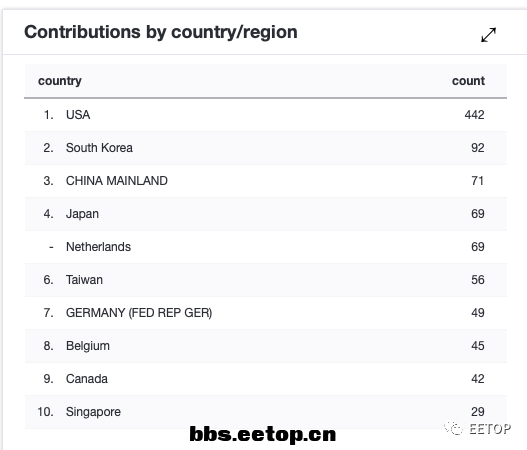
As shown in Figure 4, the contribution of the United States to JSSC is in an absolute leading position, even higher than the sum of the countries ranked 2-9 behind. This reflects the absolute dominance of the United States in chip design, and is also the reason why the United States dares to impose chip embargo and technology blockade on Huawei and ZTE companies in China without restraint. After decades of continuous struggle, Chinese Mainland's contribution to JSSC has reached the third place, lower than that of South Korea and slightly higher than that of Japan/Netherlands. Taiwan, on the other hand, ranks sixth. Among the top ten countries and regions, Asian countries and regions account for 5 places, with South Korea ranking second, reflecting the broad prospects of integrated circuit design in Asia.
5. Which institutions have contributed to JSSC?
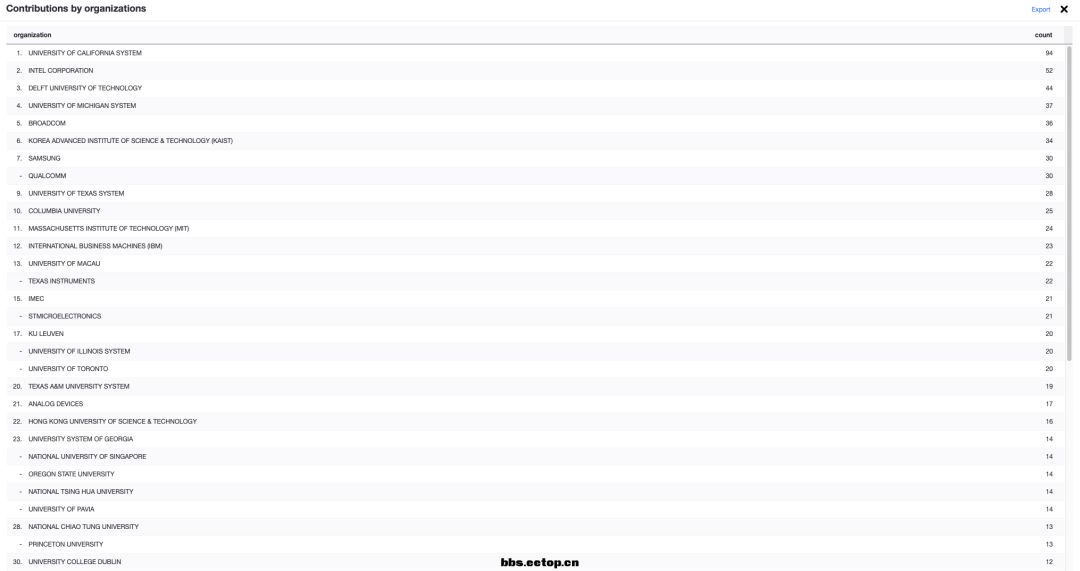
Figure 5 shows the top 50 universities or companies contributing to JSSC. The University of California System and Intel are listed as the top contributing universities and companies, respectively.
In terms of the company, well-known chip companies such as Intel, Broadcom, Qualcomm, and Samsung are all ranked in the top ten. Unfortunately, Chinese chip design companies did not make the list.
In recent years, the University of Macau in China has experienced rapid development in microelectronics, ranking 13th on the JSSC contribution list. The Hong Kong University of Science and Technology ranks 22nd. Only Tsinghua University from mainland China made the list, tied for 41st place. In Taiwan, China, Hsinchu Tsinghua University and National Jiaotong University are on the list. It can be seen that the University of Macau has become the most shining star in microelectronics design in Greater China.
This list can also serve as a guide for students who want to study microelectronics abroad to choose schools.
6. Conclusion
As the top tier journal in integrated circuits, JSSC's big data analysis can accurately reflect trends in integrated circuits. The JSSC papers on AI and 5G have become popular, increasing the impact factor of JSSC and indicating the development direction of integrated circuits in the coming years. The JSSC regional contribution ranking shows that Chinese Mainland has made great progress in the field of integrated circuit design after decades of efforts, but it is still far from the United States, even compared with South Korea. In terms of universities, the University of Macau, the Hong Kong University of Science and Technology, and Tsinghua University have all entered the JSSC list, demonstrating the strength of China's scientific research field. Among them, the University of Macau has shone brightly in recent years. In the future, we hope that more universities and chip design companies from mainland China can enter the JSSC list.